

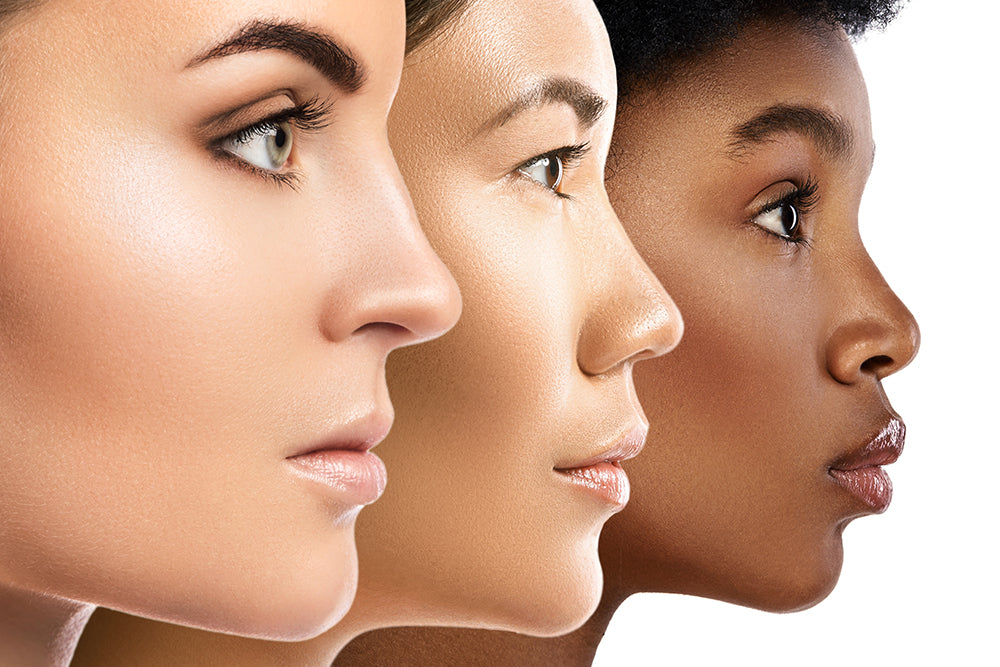
HOW TO DETERMINE YOUR SKIN TYPE

How To Determine Your Skin Type
Have you ever felt like certain skincare products are all wrong for your skin? They work great on your friends but never seem to address your issues. Attempting each new product only ends up in a cycle of doubt as different problems and reactions arise. Not to fear! Your skin isn't "broken"- you are probably just using products that aren't right for your skin type. To find your perfect skincare product mix, you first need to determine your skin type. Then the piececs fall into place! Here's how.
Skin types are generally divided into four categories; normal, oily, dry, and combination. These types are divided by certain elements like the amount of water and oil your skin contains, how sensitive it is, etc. To make things more confusing, your skin type can change over time. Learning the typical characteristics of each skin type will help you immensely when it's time to make your skincare selections.
With the above in mind, get ready to face your mirror and take a simple test. Standing at a normal distance from your mirror, study your pores. Can you see them? Larger pores usually go hand in hand with oily skin. If your pores look very large on your T-zone, but not cheeks, you probably have combination skin. Too hard to tell? Move on to the next step.
Oily Skin
Start with Correcting Foaming Cleanser, a dense yet airy foam that instantly removes oils and impurities. Next, use Correcting Refining Toner to lift away excess debris and dulling cells. A few times a week, swap this step for Correcting At-Home Professional Peel to exfoliate more deeply and smooth texture and tone. Finish with Correcting Hyaluronic Serum to reinforce the skin barrier and leave skin hydrated without weight.
Read more
Valentine's Day isn't just about celebrating your love for your partner, family and friends. Make it about celebrating the love you have for yourself! Self-love and self-care go hand in hand, so...
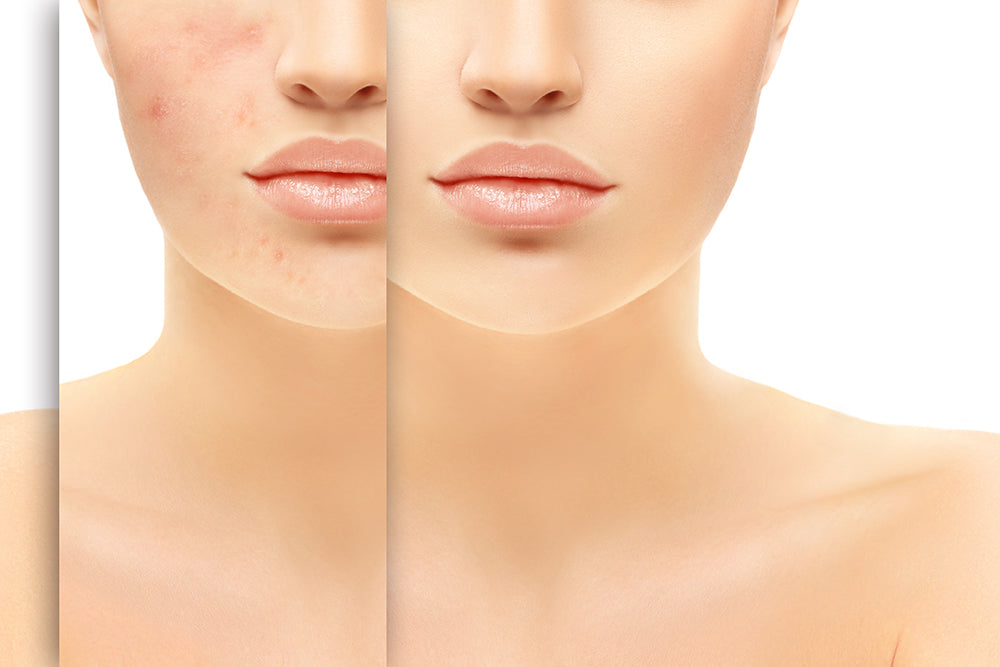
Congested skin is primarily caused by a combination of impurities, sweat, dead skin cells and natural oils. If this becomes trapped within the pores, it can cause whiteheads or blackheads to deve...